
Perform Market Research 2x Faster With Auditable Numbers
AI has made market research much faster. A prompt can produce a market size, competitive landscape, industry trends, and a long list of sources in minutes.
But faster research creates a new problem: how do you know the numbers are right?
Ask an AI model to estimate the same market twice and you can get very different answers. The issue isn't necessarily the lack of information. It's that the reasoning behind the number is often difficult to follow.
For research that goes into a client presentation, a number needs to be more than plausible. You need to be able to understand what drives it, how it was calculated, and what evidence supports it.
Start by understanding what actually drives the market
Good market research starts with the market itself, not a market-size number.
Before estimating the opportunity, you need to understand the underlying volume and value drivers. What is being sold? To whom? At what price? And what factors determine how much of the product or service is consumed?
These drivers provide the foundation for building the market size.
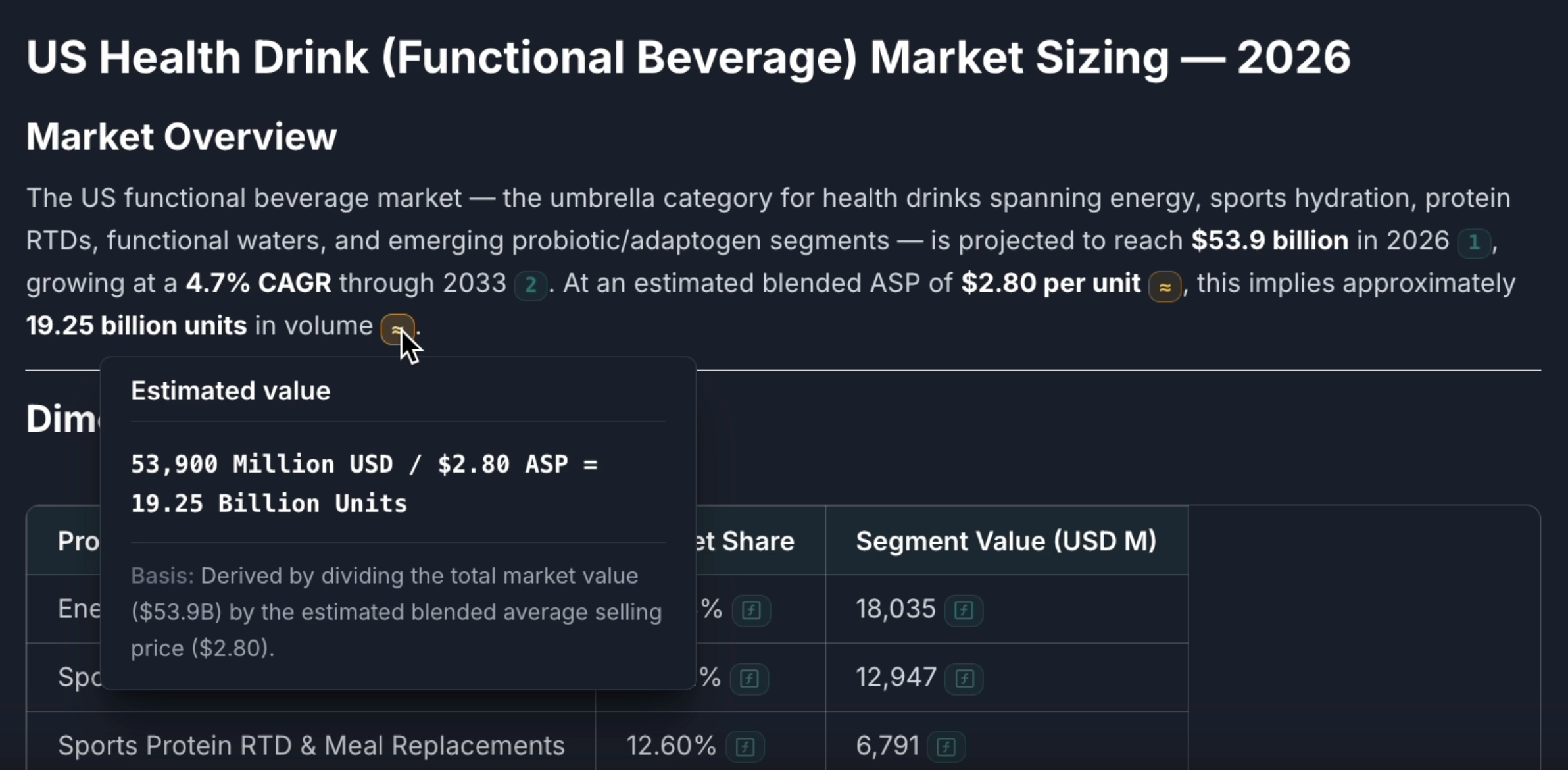
This matters because it changes the question from:
“What is the market size?”
to:
“What is driving the market size?”
And that makes the resulting number much easier to assess and defend.
Define the market before you size it
The next challenge is deciding what actually belongs in the market.
Markets rarely have one obvious boundary. Products can differ, customers can buy through different channels, and price points can vary substantially.
A robust research process therefore needs a clear segmentation framework across the relevant dimensions — for example, products, channels, and price.
The segmentation should be mutually exclusive and collectively exhaustive, so that the market can be analyzed systematically rather than as a collection of disconnected categories.
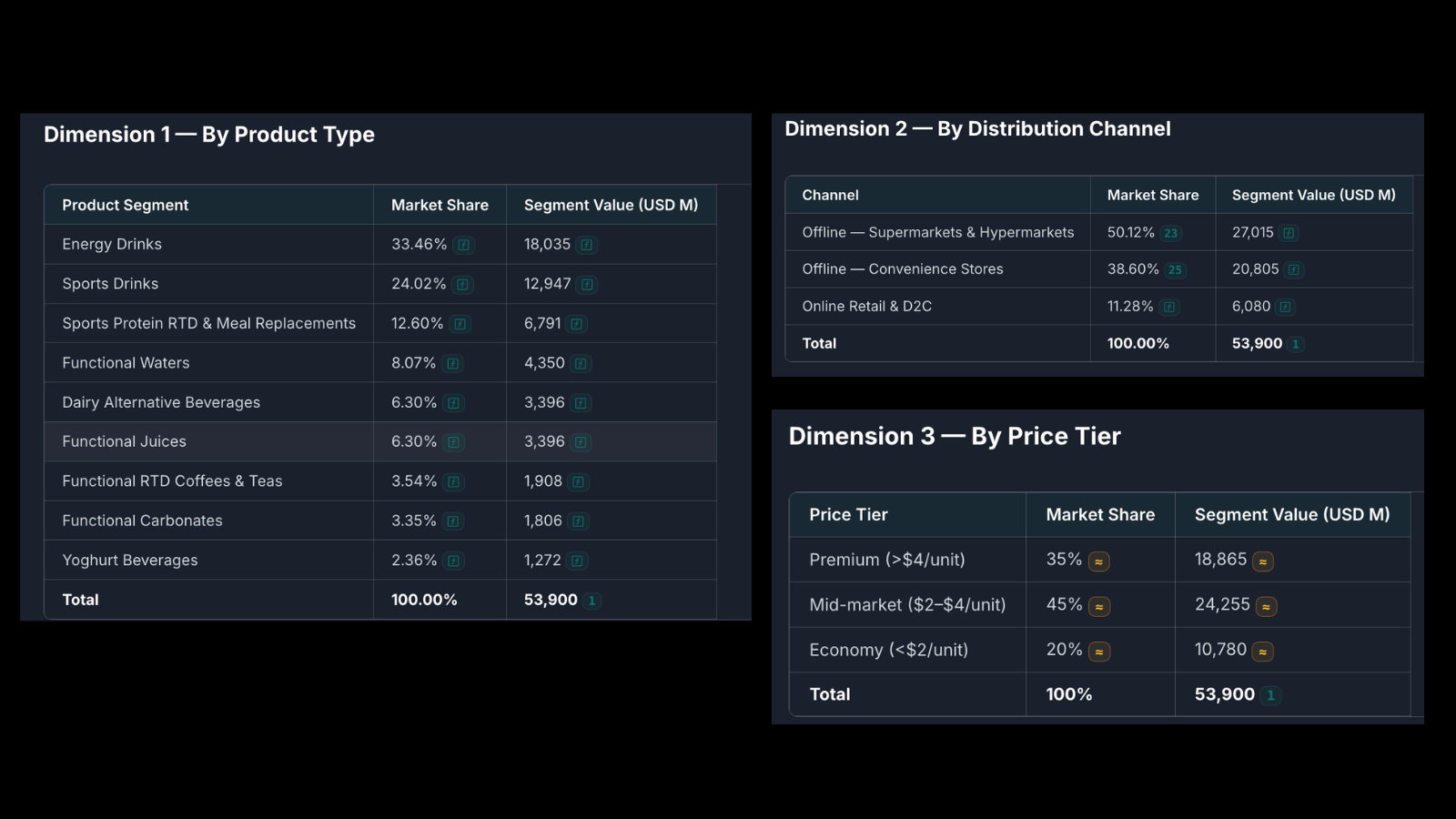
Once the market is structured this way, the research becomes much more useful. You can see where the opportunity sits, compare segments, and understand which parts of the market are actually contributing to the overall value.
Build the evidence behind every important number
Once the market structure is defined, the research needs evidence.
This usually means bringing together information from multiple sources — industry reports, company filings, product pages, government data, pricing information, and other relevant sources.
But collecting sources isn't enough.
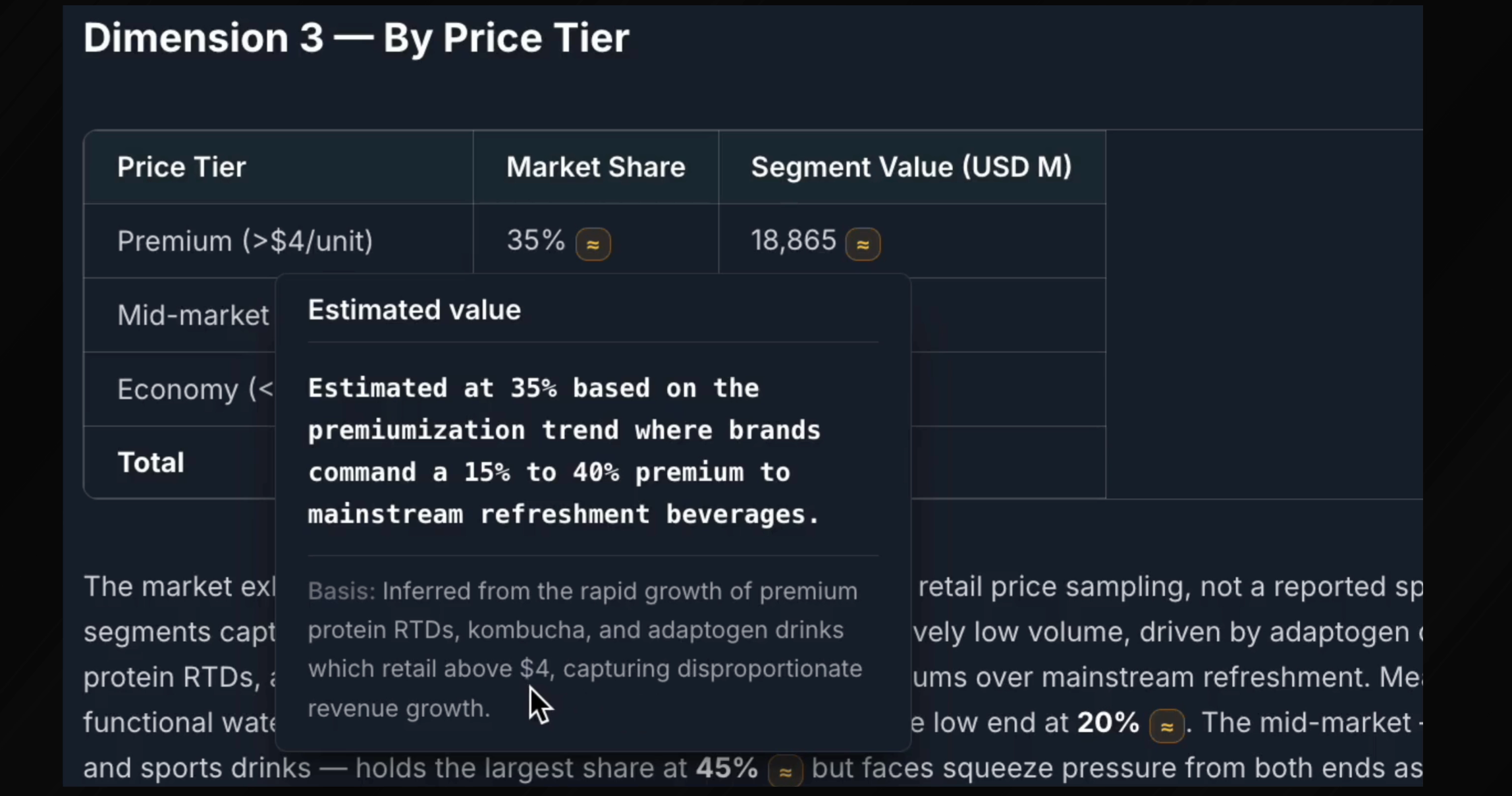
For a number to be auditable, you should be able to identify exactly what information from the source supports it.
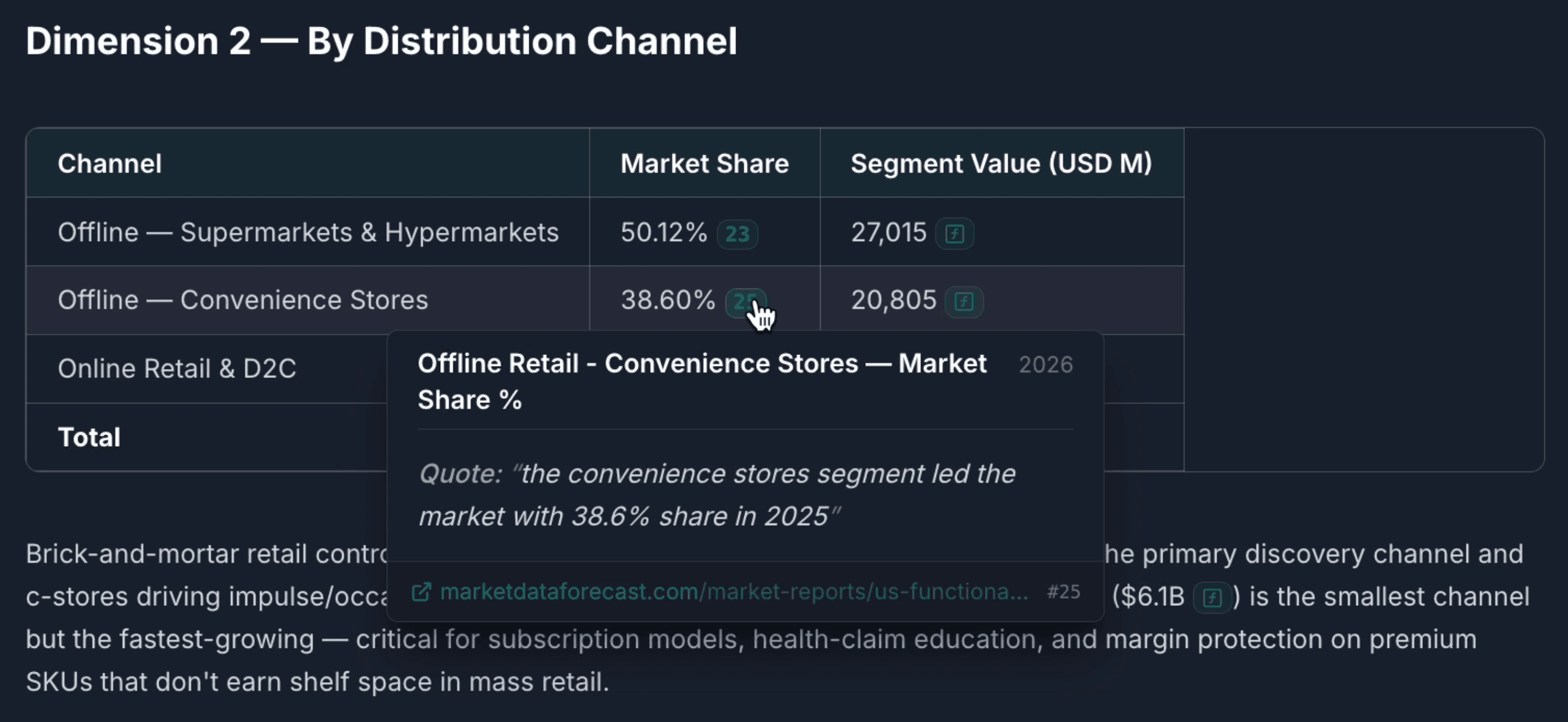
That becomes particularly important for calculated numbers. If a market size is derived from several underlying inputs, each input should have a clear evidence trail.
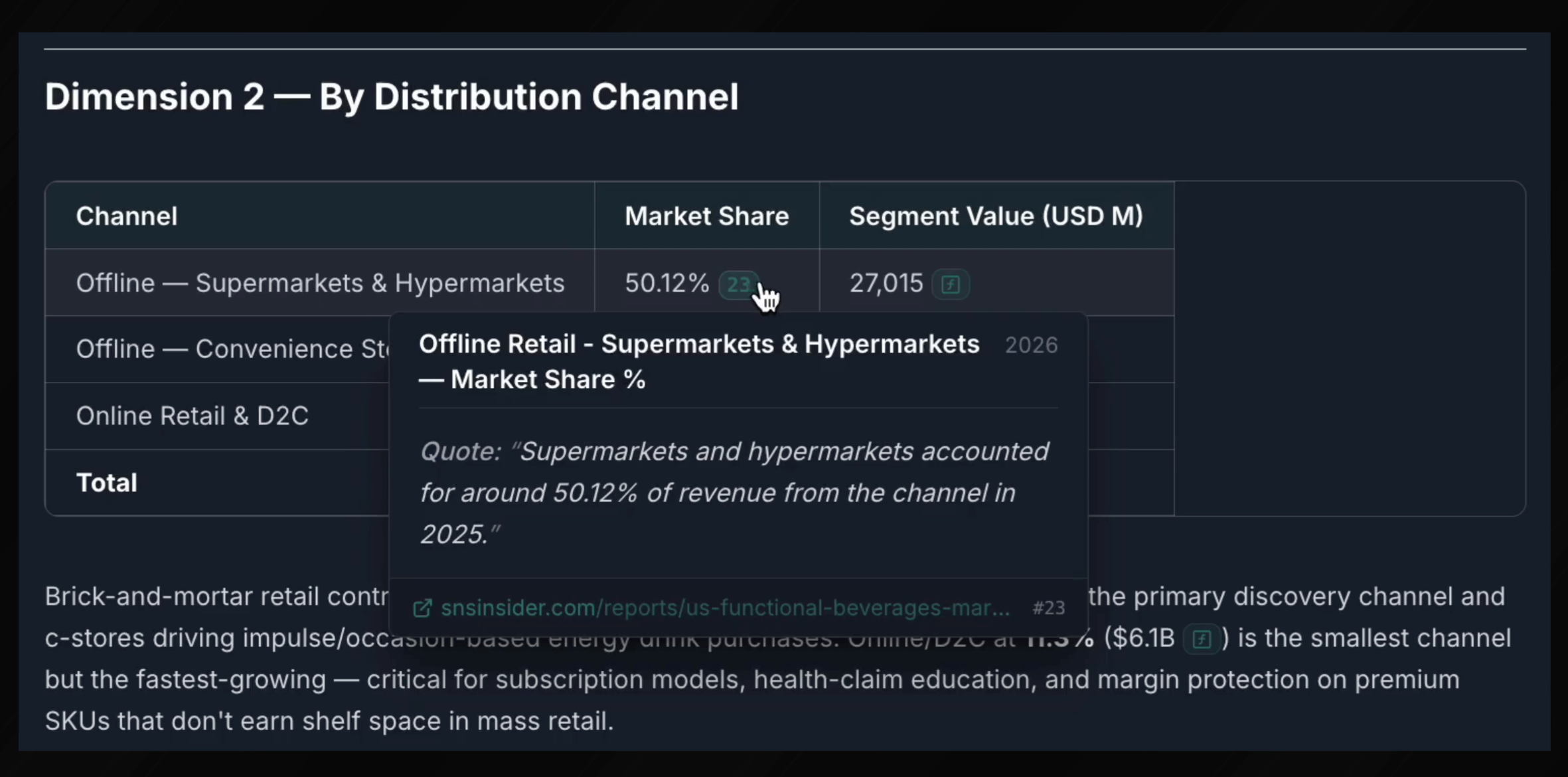
This creates a much clearer chain between the evidence and the final output.
Instead of simply saying that a number came from a source, the research can show the relevant information from the source and how it contributes to the analysis.
That is what makes a number auditable.
Use real products to understand pricing
Pricing is one of the most important inputs when sizing many markets, but it is also one of the easiest areas to oversimplify.
A single average price can hide significant differences between products and segments.
Looking at actual products in the market provides a more grounded way to understand these differences. Product examples can reveal the range of prices available, how products are positioned, and where meaningful price tiers exist.
These observations can then be used to build more realistic price assumptions rather than relying on an arbitrary average.
The result: faster research you can stand behind
The value of AI in market research isn't simply that it can produce a report faster.
The bigger opportunity is to increase the speed of research without losing the ability to scrutinize the numbers.
That means:
- Building the market from its underlying volume and value drivers
- Structuring the market across relevant dimensions
- Using multiple sources to support the research
- Keeping the evidence behind calculated numbers visible
- Grounding pricing assumptions in real products
This is the approach we are taking with WinningStrategy.ai.
The goal is simple:
Perform market research 2x faster, with numbers you can confidently put in front of a client.
Because when someone asks, “Where did that number come from?”, your research should have a clear answer.
AI Analyst that delivers the work of a consulting team, in minutes
Every number auditable, so you can defend it with confidence